
Morton Grove Directory Collections
The historical shelf is broader than one publisher’s annual city directory. A complete printed Polk or criss-cross run was not verified for Morton Grove. The strongest proven sources are Library of Congress telephone volumes, Morton Grove Public Library newspapers and school books, My Morton Grove oral histories, and Historical Society records. Coverage gaps must remain visible.
| Collection | Years or run | Where held | Access |
|---|---|---|---|
| Chicago Suburban White Pages | 1948–1951 identified | Library of Congress | Free digitized scans |
| Chicago Suburban North White Pages | 1960/61, 1961/62, 1962/63, 1964/65 | Library of Congress | Free scan browsing; Morton Grove entry verified |
| Morton Grove Champion | 1960–June 2009 microfilm; July 2009–2017 CD; 2018–2021 USB; recent print | Morton Grove Public Library | In-library research |
| Morton Grove Life | January 1967–October 2004 | Library microfilm; Historical Society print | In person |
| Morton Grove News | January 1961–August 1984, scattered | Library and Historical Society | Microfilm, CD, and print |
| School yearbooks | Selected runs from 1937–2019 | Morton Grove Public Library | In-library use |
| My Morton Grove interviews | 1970s–present | Morton Grove Public Library | Transcript, audio, and digital files in library |
| Niles Township record books | One acquired book dates to 1843 | Historical Society and Museum | Staff-assisted; no public name index verified |
This coverage table sets honest limits. A missing year may mean the volume was not published, was not retained, is held elsewhere, or simply was not identified in the official sources reviewed.
Start Morton Grove Directory Research
The Morton Grove Public Library local-history collection is the best first desk. Materials may be requested for use inside the library. The Information Desk lists 847-929-5101 and info@mgpl.org. Staff can route a request among newspapers, school books, newsletters, oral histories, videos, and local-history files. The library does not promise that each item is digitized or searchable by name.
Ask with a surname, address, date range, and source type. “Champion obituary, 1975–1980” is more useful than “all records about a family.” Request the issue and page citation with any result. For a city directory search, ask whether an address-order, reverse, telephone, or suburban volume exists for the target year. Exact local criss-cross holdings were not found in the public catalog notes.
The library collection page shows how Morton Grove city directories connect to related local formats.
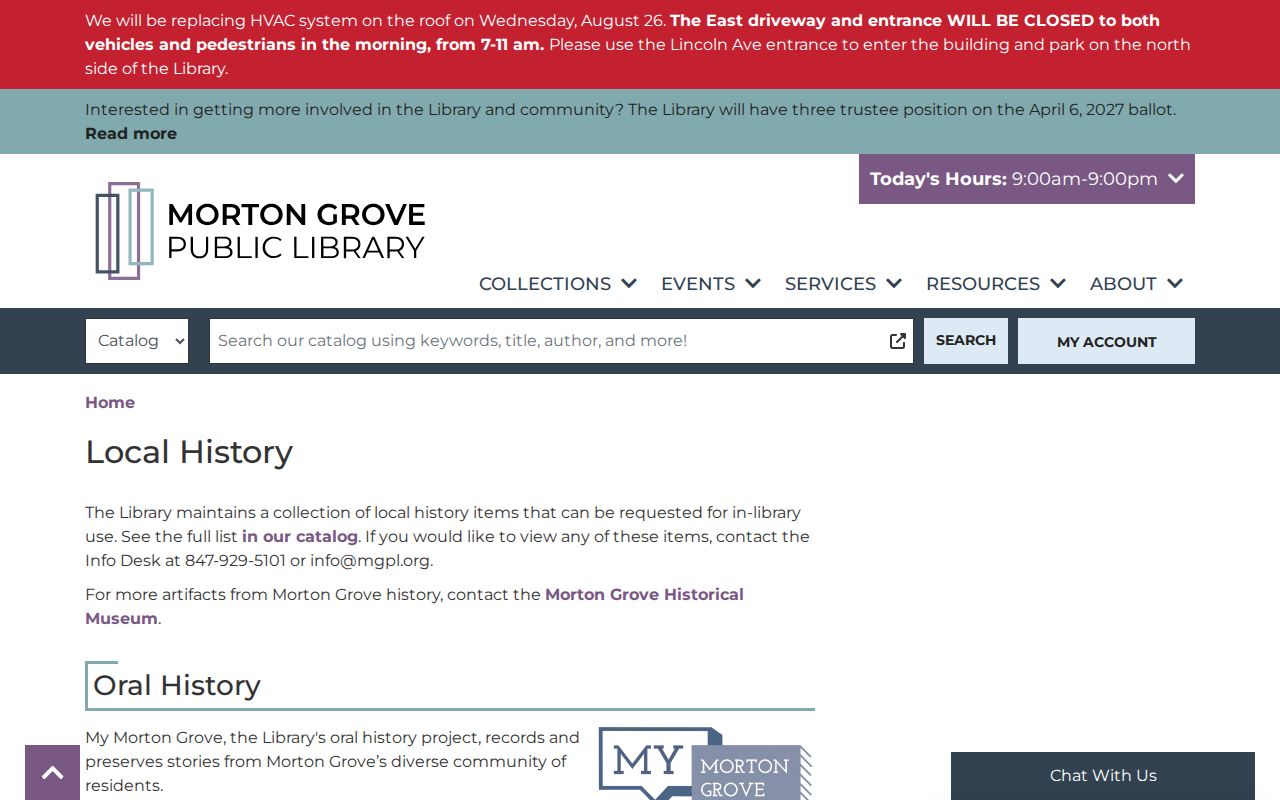
The captured page is useful because it identifies both the collection types and the staff-assisted access route.
Read a Morton Grove Directory Entry
A verified 1960/61 suburban telephone-book entry contains a person’s name, 6343 Elm, the locality shortened to “Mortn Grv,” and a telephone exchange and number. No spouse, occupation, owner mark, or present-status field appeared in that sample. Do not import fields found in other publishers’ books unless the abbreviation key for the Morton Grove volume supports them.
| Printed name | A name as set by the directory publisher; spelling and initials may differ elsewhere. |
|---|---|
| Street address | A dated contact address that should be checked against later volumes and land records. |
| Locality | Often abbreviated, such as “Mortn Grv,” which can defeat a modern exact search. |
| Exchange and number | The telephone format used when the volume was printed, not a current contact. |
| Volume and image | The citation needed to find and review the entry again. |
- Criss-cross directory
- A volume or section arranged by street and number, allowing address-first research.
- Householder index
- An address or household-oriented index when the publisher actually supplies one.
- Abbreviation key
- The volume’s own list explaining marks and shortened words. Read it before interpreting an entry.
OCR, the software that turns scanned print into searchable text, can misread names, street abbreviations, and exchanges. Browse the image near the expected spelling when keyword search fails.
Digitized Morton Grove City Directories
The Library of Congress holds Illinois White Pages, Chicago Suburban North 1960/61 and provides a grid viewer for the scan. Related official resources include Chicago Suburban volumes for 1948 through 1951 and Chicago Suburban North for 1961/62, 1962/63, and 1964/65. Save the item title, volume year, page or image identifier, and screen image.
A directory find should be tested in the volumes on both sides of the target year. A first appearance can reflect a move, a new listing, or a publication change. A disappearance can mean a move, death, unlisted telephone, household consolidation, or a gap in the run. The entry alone does not select among those causes.
The phone-book viewer is free online, so it is the most direct digital city directory route. When OCR fails, switch to page browsing and use the printed alphabetical sequence.
Morton Grove Newspapers Fill Gaps
Newspapers place a directory clue in local time. The Morton Grove Champion has the deepest identified run, split across microfilm, CD-ROM, USB, and recent print. Morton Grove Life spans January 1967 through October 2004 on microfilm, while Morton Grove News covers scattered material from January 1961 through August 1984. The Historical Society reports fuller print holdings for Life and News.
Search a surname with an address, club, school, business, or street. Notices, organization reports, obituaries, and articles may explain a move or connect relatives. Keep the publication, issue date, page, headline, and format. A newspaper can contain spelling or reporting errors, so compare key facts with a directory scan or official record.
The Champion’s change from film to disc to USB is a practical access detail. A researcher must ask for the correct medium by date rather than expecting one online index.
Morton Grove Names in Yearbooks
Yearbooks add class year, activity, organization, and photo-caption context. Niles North Saga holdings include 1965–70, 1972–79, and 1981–2019. Niles West Spectrum includes 1962–64, selected 1969–83 years, and 1983–2019. Niles Township or East Reflections reaches earlier, with 1937–44, 1950–61, and 1963–64 runs.
A yearbook connection is dated community evidence, not proof of a home address or current residence. Record the school, title, year, page, printed name, and caption. Then compare the person with a city directory entry, newspaper issue, obituary, or eligible vital record. Missing years should remain gaps rather than being filled by assumption.
The MGPL genealogy page also routes researchers to licensed databases, the Chicago Tribune Historical Archive, FamilySearch, Illinois archives, Newberry Library, and NARA Great Lakes.
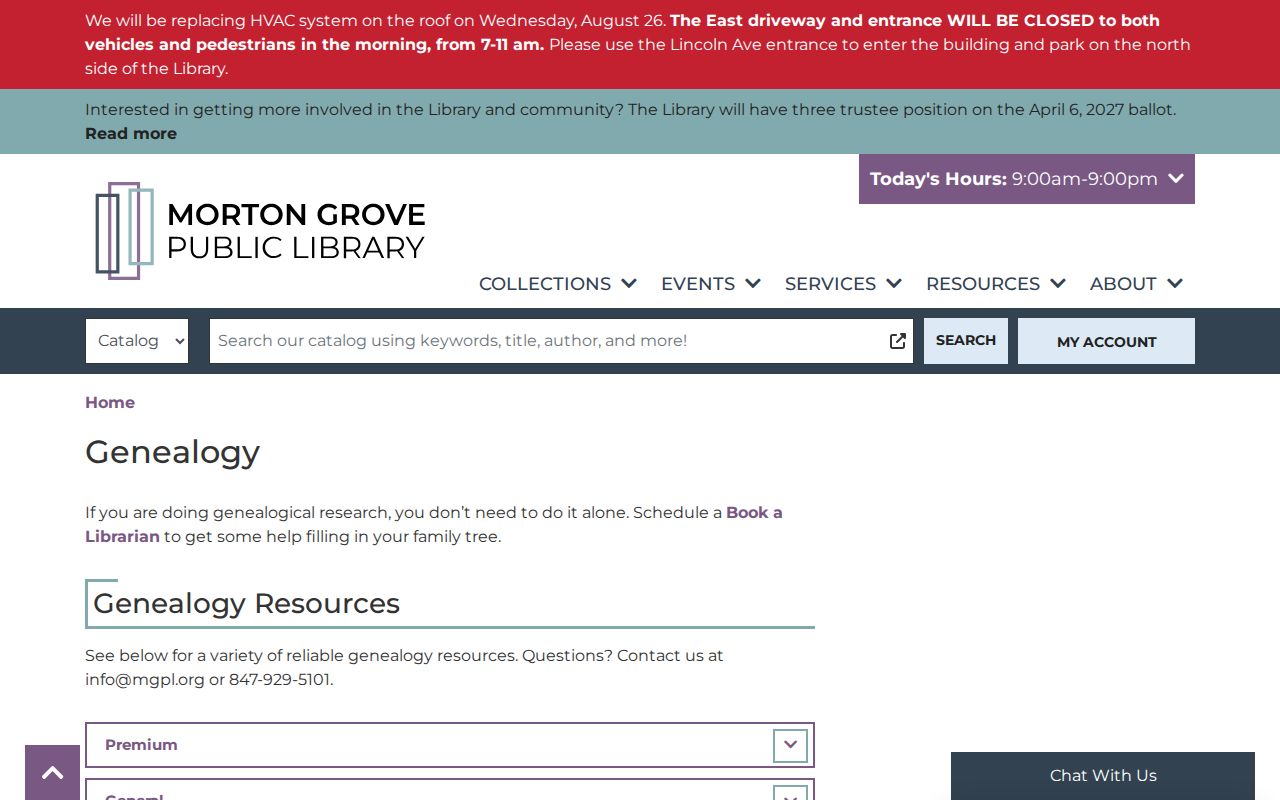
The library’s resource list is a routing aid, while access terms vary by database and collection.
Hear Morton Grove Local Memory
“My Morton Grove” includes interviews from the 1970s to the present. Full transcripts, audio CDs, and digital files are described for in-library use. Oral history can explain businesses, clubs, street scenes, and local names that a terse directory line cannot. Cite the interviewee, interview date, format, and relevant passage.
Memory is evidence with provenance, not a certified fact. Test dates, addresses, and relationships against contemporary print. The library also holds historical newsletters from American Legion Post 134, the League of Women Voters Morton Grove/Niles, Morton Grove Little League, and PALS Letter Gals. These collections can place names in dated civic activity without creating a present member roster.
A library storymap on Prohibition-era roadhouses adds a strong place-history route. Search a venue or road name in city directories, maps, and newspapers instead of assuming every remembered detail is exact.
Morton Grove Museum Archive Leads
The Morton Grove Historical Museum and Education Center is jointly connected to the Historical Society and Park District. The Education Center is used for archive storage and research. The Haupt-Yehl House, built in 1888, was moved from Lincoln Avenue to Harrer Park. That move is a useful warning: an old structure and its current museum site can have different valid addresses.
The Historical Society says it acquired Niles Township record books, including one dating to 1843. No public digital name index was verified. Contact staff with a surname, office, township, date, or volume question. Hours listed for 2026 were Tuesday through Thursday, 10 to 3, and the third Sunday from noon to 3, with appointment access otherwise. Recheck before visiting.
The museum collection page shows the local archive setting.
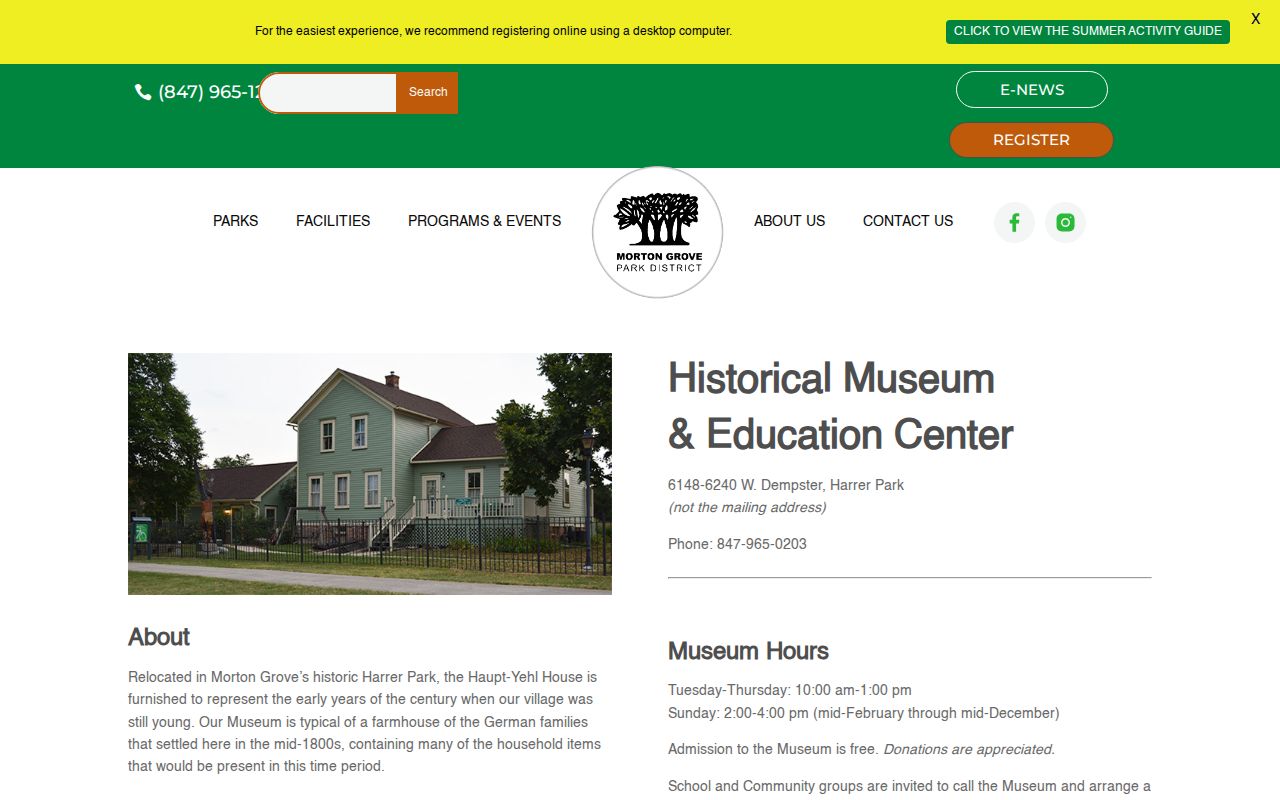
The archive is a staff-assisted source for structures, founders, organizations, artifacts, and township history.
The Morton Grove Historical Society provides the companion organization route.
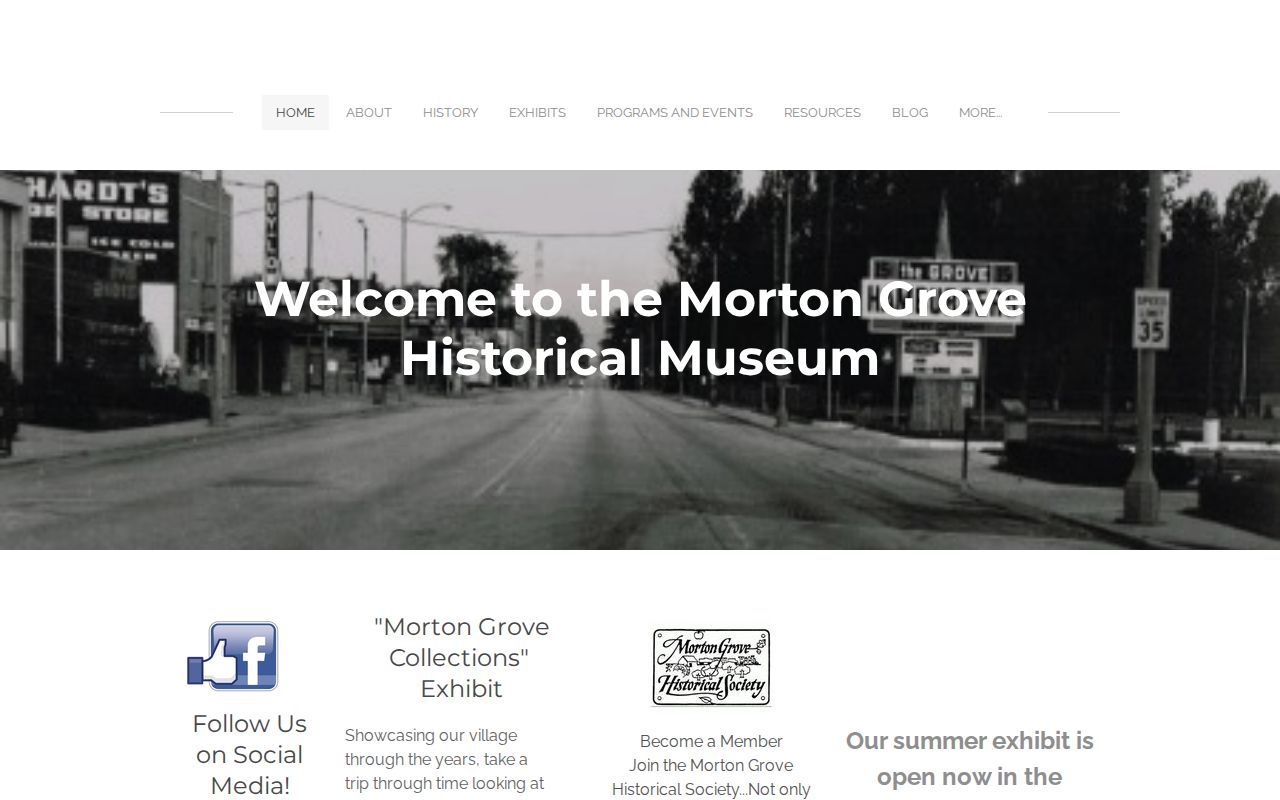
The Society can help identify a record book or local file even when no searchable online index exists.
Trace Morton Grove Families by Year
A Morton Grove city directory becomes more useful when each entry is treated as one point on a timeline. Work outward from the best-known year, then test names and places in independent sources. Keep negative results, because a missing volume and a missing person are different findings.
- Find the surname in one verified phone-book year. Save the exact spelling, initials, address, exchange, volume, and image.
- Check the prior and next available volumes. Note address changes and gaps without guessing why they occurred.
- Search MGPL newspaper runs around the move or disappearance. Use address, organization, school, or business terms to narrow the name.
- Compare school yearbooks and oral histories when age and local ties fit. Cite the item and page or interview.
- Pair the timeline with the 1950 federal census where applicable. The 1960 census is not yet public under the 72-year rule.
- Use eligible FamilySearch, county, archive, deed, probate, or vital-record sources to confirm family links.
FamilySearch identifies Cook County marriage records from 1871–1969 and birth registers from 1871–1915, but the 1871 courthouse fire caused severe survival loss. An index is a finding aid. Seek the underlying record when access rules allow.
Read Morton Grove Directories Carefully
A city directory is not a continuous residence register. Telephone books omit people without listed service. Yearbooks show a school connection at a date, not a current address. Deeds document land. Oral histories may contain memory errors. Newspapers may repeat an incorrect spelling. Each source keeps its own scope and gaps.
Publisher details and a complete Morton Grove Polk or reverse-directory run were not verified. Do not invent years or abbreviation meanings. Ask MGPL and Newberry Library for holdings, and quote the title page or key when one is found. For current address-keyed parcel and permit systems, move to the Morton Grove street directory.
Note: Retain the search date, volume, issue, page, image identifier, printed locality, and access conditions for every historical directory finding.